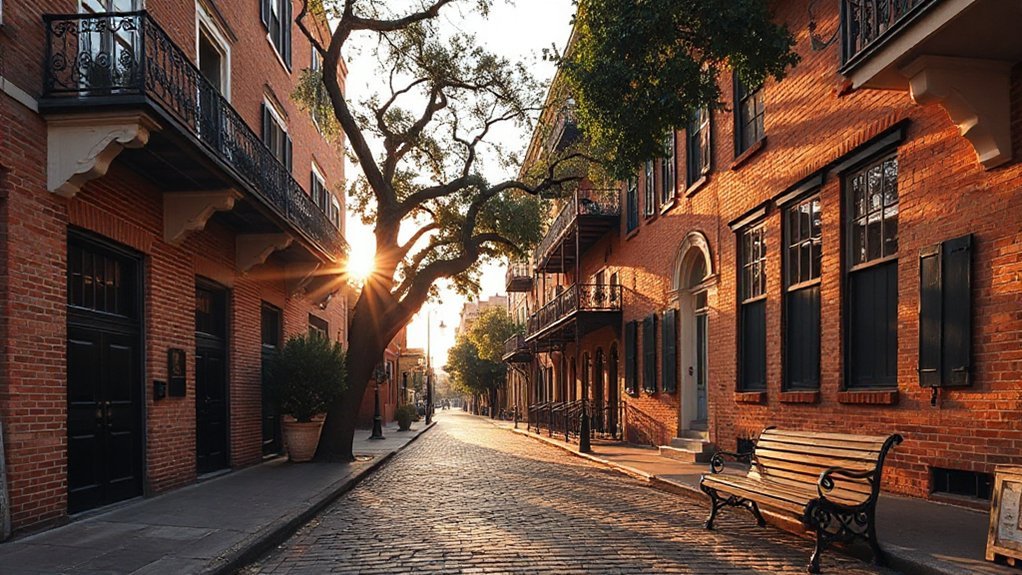
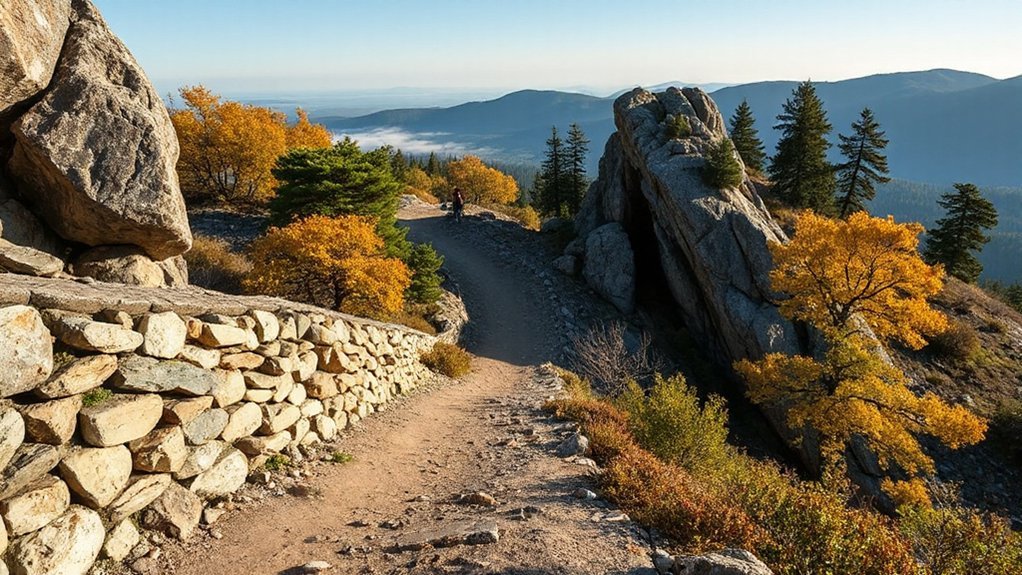
You can trade Savannah’s moss-draped streets for sunlit beaches, quiet marshes, and living history just a short drive away. Tybee and Hilton Head give you sand, lighthouses, bike paths, and easy seafood meals. Beaufort and Wormsloe serve slow walks under live oaks and stories of the coast. Hunting Island and Ossabaw offer wild beaches, lighthouses, and solitary marshes to reset. Keep going for routes, tips, and the experiences that fit how you want to roam.
Key Takeaways
- Tybee Island: sandy beaches, iconic lighthouse, bike rentals, kayak and dolphin tours—perfect quick salt-air reset.
- Hilton Head Island: pristine beaches, extensive bike paths, coastal dining, spa options, and unhurried exploration.
- Beaufort: moss-draped streets, antebellum homes, Gullah cuisine, carriage tours, and riverfront promenades with tidal-marsh views.
- Hunting Island and Ossabaw offer lighthouses, secluded beaches, sea-turtle nesting, trails, and guided residencies or public tours.
- Skidaway and Savannah NWRs provide boardwalks, birding hotspots; arrive early, carry water, and practice quiet observation etiquette.
Tybee Island: Beaches, Lighthouse, and Water Sports
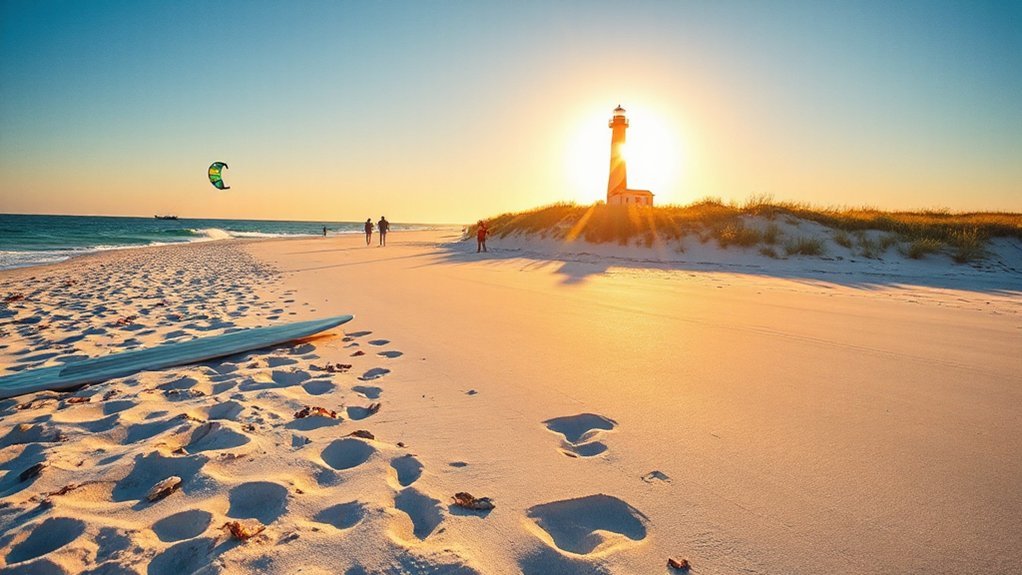
Stepping onto Tybee’s sandy shore feels like a small, invigorating escape from the city — you’ll instantly relax as the surf and salt air reset your pace. You wander toward the iconic lighthouse, its white tower promising wide views and a reminder that navigation can be simple: keep moving, keep curiosity. You can rent a bike, paddle a kayak, or join dolphin tours that put playful pods in your path, making freedom tangible. If you time it right, you might spot a sea turtle nesting or see hatchlings make their brave dash; those moments humble you and lift you simultaneously. Local cafés and casual seafood spots let you linger without rush, savoring shrimp and porch-time conversations. Tybee gives you choices: active water sports or slow beachcombing, sunset watching or quiet reading. You leave lighter, reminded that short escapes recharge you and expand the map of possible days ahead.
Hilton Head Island: Beaches, Biking, and Coastal Dining
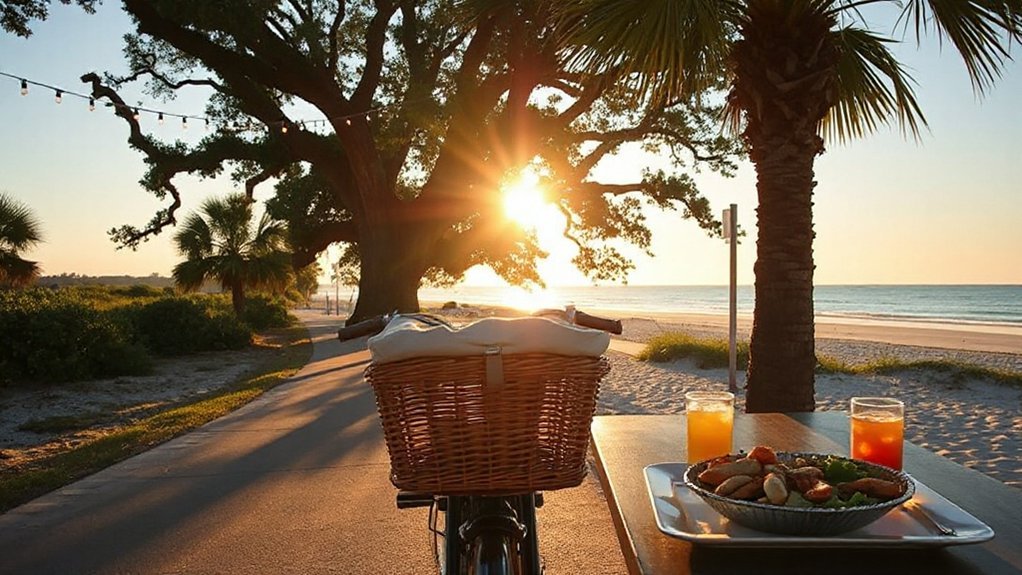
If Tybee reset your pace with salty air and lighthouse views, you’ll find Hilton Head offers a different kind of calm—wide, pristine beaches framed by long, shaded bike paths that invite you to pedal at your own speed. You’ll feel the freedom as you coast past maritime pines, stopping for coffee or to watch pelicans dive. The island’s coastal dining makes every meal a celebration—fresh shrimp, oysters, and sunsets on a porch where you can breathe and choose your next move. Rent a bike, follow quiet trails, and let the rhythm guide you; this place encourages slow decisions and bold detours. If you crave pampering, Spa retreats dot the island, ready to melt tension and reset purpose. Even if golf culture surrounds parts of the island, you don’t have to play; the landscape itself invites exploration. Leave schedules behind—Hilton Head hands you space to roam, taste, and be.
Beaufort: Historic Streets, Riverfront, and Gullah Culture
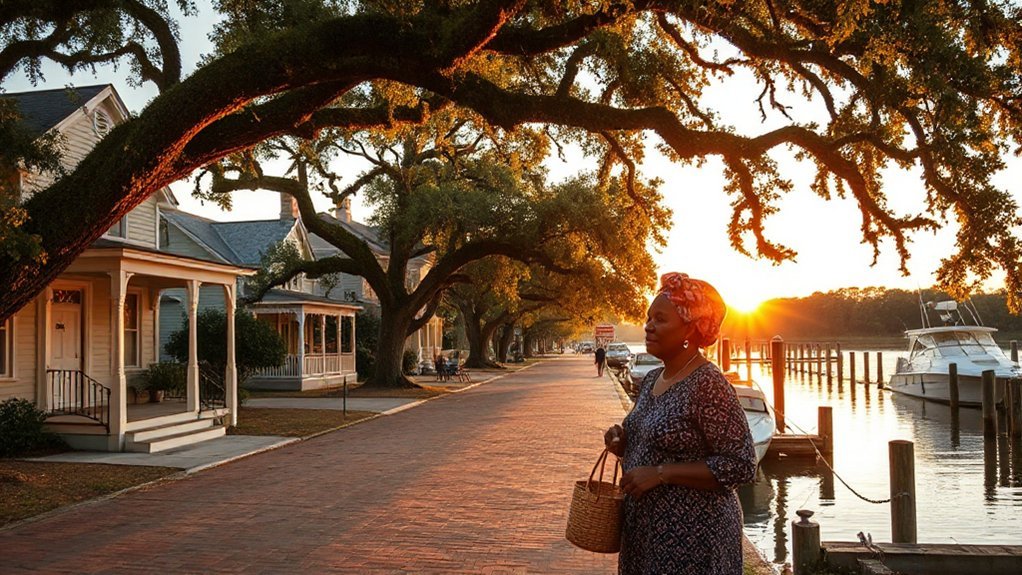
Wandering Beaufort’s moss-draped streets, you’ll feel history unfold around you—antebellum homes, shaded squares, and a riverfront promenade that frames tidal marshes and sky. You can stroll at your own pace, pausing for the quiet confidence of old oaks and the gentle harbor rhythm. Let a local guide open doors to stories rooted in resilience: Gullah Cuisine offers flavors that connect past and present, and neighborhood kitchens invite you to taste heritage. Choose Carriage Tours if you want a way to learn; their guides weave anecdotes make the town personal. Find galleries, bookshops, and waterfront benches where you can breathe and reflect. Beaufort rewards the traveler who craves freedom — room to wander, to hear history spoken softly, to make detours. You’ll leave lighter, inspired to carry a bit of this coastal calm with you, knowing the town keeps its stories alive for anyone who arrives ready to listen.
Hunting Island State Park: Pristine Beaches and Lighthouse Views
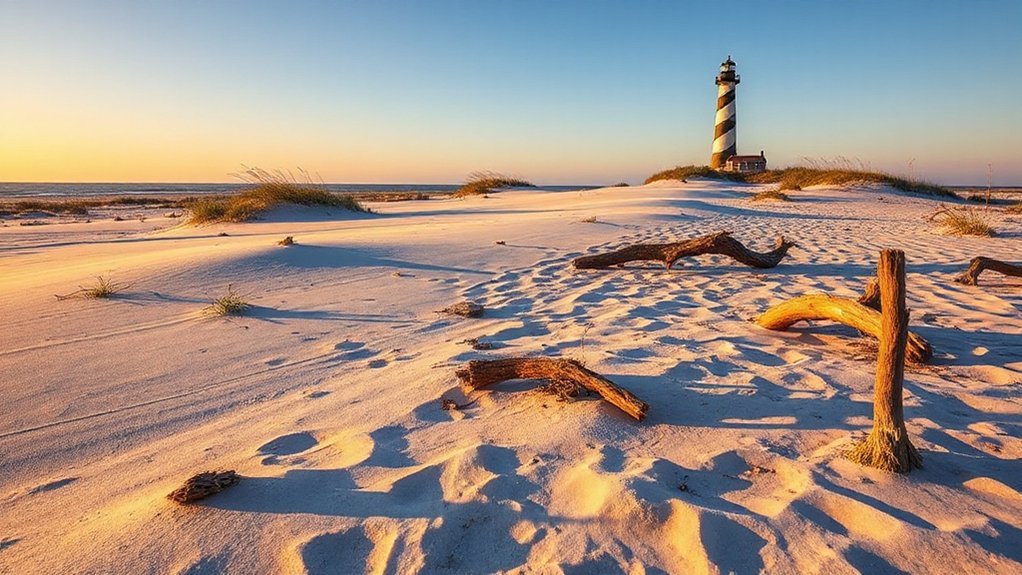
A lighthouse crowns Hunting Island, guiding you to wide, pristine beaches and salt-scented trails that invite slow, deliberate breathing. You can climb the iron steps for a Gulf-stream panorama, then wander dunes where shorebirds wheel and the ocean keeps time. When you pause, you’ll notice nests marked by volunteers—Sea turtle tracks proof that life returns here every season—and you’ll feel honored to give them space. Bring a light pack, a curious mind, and respect for fragile habitats. If you stay overnight, Campground facilities offer quiet loops under live oaks, hot showers, and a sense of small, welcome community around campfire light. Hike the maritime forest, watch tidal inlets change, and let the wide horizon remind you that freedom can be simple: salt air, sand between your toes, and unhurried hours. Your visit can be both restorative and exhilarating; the island waits, patient and open, ready whenever you are.
Ossabaw Island: Wilderness, Wildlife, and Art Residencies
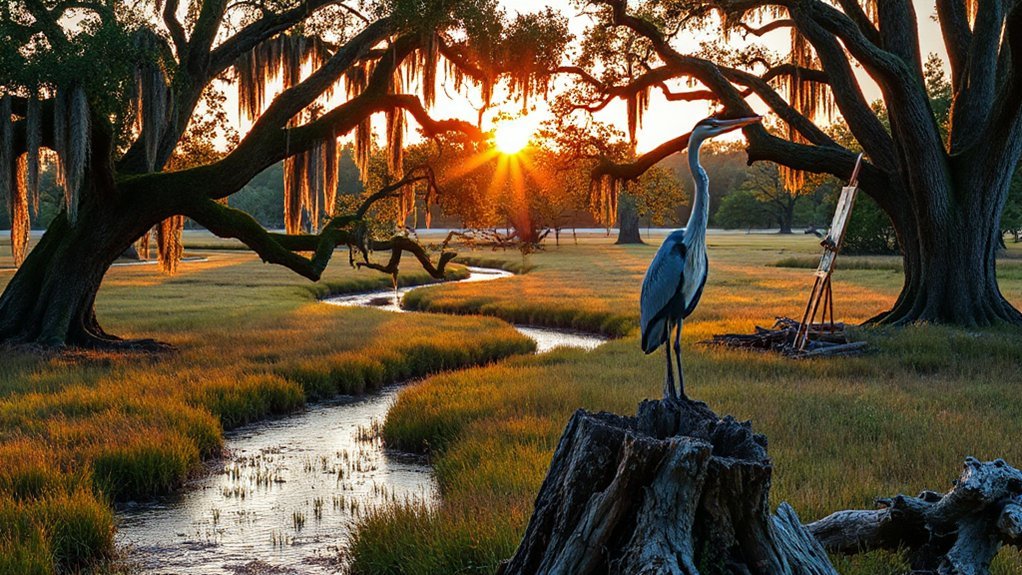
Because you’re craving quiet and wide-open sky, Ossabaw Island gives you a rare blend of untouched wilderness, rich wildlife, and an artistic spirit that hums beneath the live oaks. When you arrive by boat, you’ll feel boundaries loosen: tidal creeks, marsh grass, and solitary beaches invite slow walking, sketching, or simply breathing. Birdsong replaces schedules; herons and ospreys become companions as you wander.
The island’s artist residencies welcome creators who want time to think, make, and listen to the landscape. You can join public tours or apply for a stay, learning via programs that respect conservation and community. Heritage archaeology work here connects you to layered human stories—Gullah-Geechee culture, plantation history, and indigenous traces—revealing persistence instead of erasure.
Leave Ossabaw lighter, your ideas clarified and your pace reset, carrying a commitment to protect places that teach freedom through stillness. You’ll return changed, keen to seek more quiet soon.
Wormsloe Plantation and Middleton Place: Live Oaks and Garden History
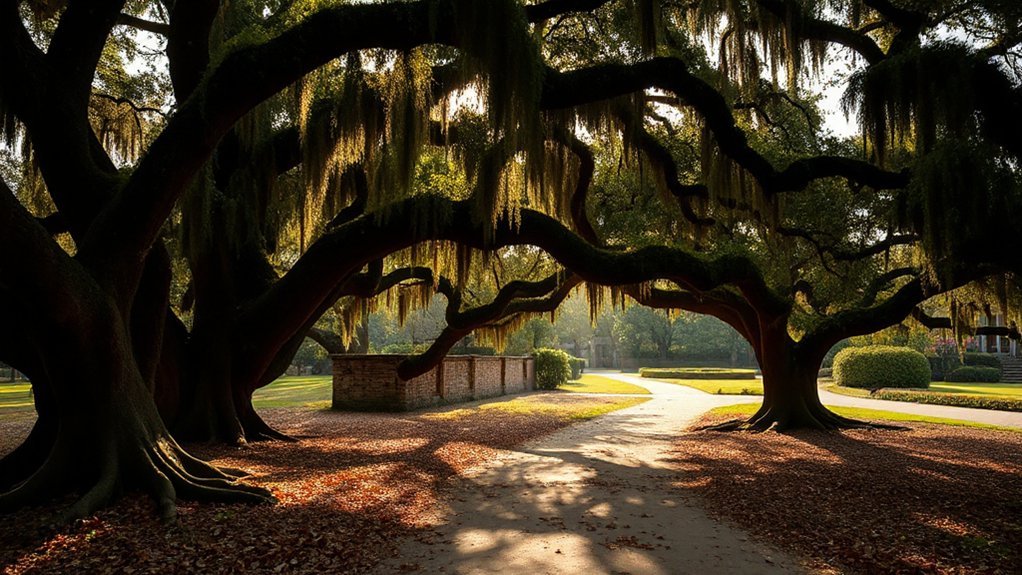

Stone-lined avenues draped in Spanish moss lead you into two very different but connected stories of landscape and labor. At Wormsloe Plantation you’ll walk beneath cathedral-like oak alleys, feel the hush, and sense Savannah’s colonial roots. The ruined tabby fort and interpretive trails don’t romanticize history; they invite you to reckon and reflect while enjoying wide marsh views. Middleton Place, by contrast, shows meticulous Garden restoration—terraced lawns, curated plantings, and living history that honors both horticulture and the enslaved craftsmen whose skills shaped the grounds. You’ll learn about the ongoing work to preserve biodiversity and memory, and you can choose to support preservation efforts. Both sites let you move freely, breathe deeply, and connect with rooted beauty that’s been tended across generations. They offer quiet inspiration: landscapes that challenge you to remember, restore, and steward history with courage and care and dignity.
Skidaway Island State Park and Savannah National Wildlife Refuge: Marsh Trails and Birding
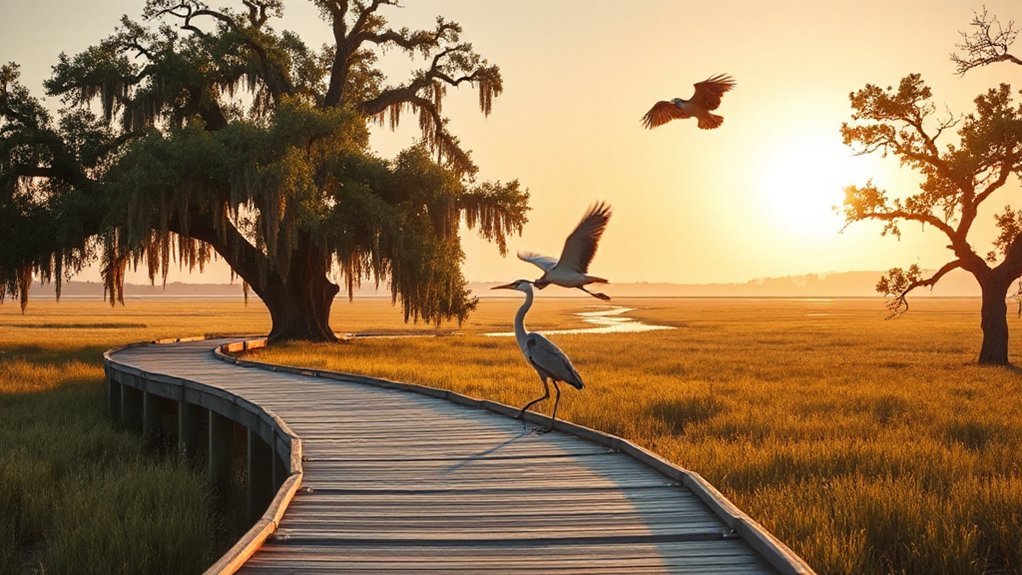
When you head to Skidaway Island State Park, you’ll find looped trail routes that wind through maritime forest and out toward the marsh. At Savannah National Wildlife Refuge, you can watch for classic birding hotspots — observation towers and roadside pull-offs where migratory shorebirds and raptors gather. As you walk, notice the tidal marsh ecology at work: salt-tolerant grasses, fiddler crabs, and changing tides that shape the habitat and the species you’ll see.
Skidaway Trail Routes
Along the salt‑marsh fringes of Skidaway Island, you’ll find a pair of trails that reconnect you with the coast: the shaded boardwalks and maritime live oak paths of Skidaway Island State Park and the sweeping marsh promenades of the Savannah National Wildlife Refuge. You can pick a short loop or a longer shoreward ramble; both offer quiet freedom. Before you go, check Navigation Tips and plan Parking Logistics — pull into trailheads early to claim shade and stroll without rush. The paths are forgiving: boardwalks, sandy tracks, and sea breeze. Walk at your pace, breathe deeper, let the marsh rewrite your rhythm.
- Let the oak canopy hush your mind.
- Follow tidal scents and open horizons.
- Carry water, a map, and patient curiosity.
Refuge Birding Hotspots
Listening to the marsh wake, you’ll discover Skidaway Island State Park and the Savannah National Wildlife Refuge as prime places to spot everything from fiddler-crab‑busy shorebirds to soaring ospreys. You’ll wander boardwalks and marsh trails with a sense of openness, learning gentle Observation Etiquette—stay low, keep voices soft, respect nests—to protect fragile moments. Use simple Spotting Techniques: scan slowly, watch silhouettes, pause with binoculars, and let movement guide you. You’ll feel liberated by wide horizons and the patience birding asks; it rewards curiosity and calm. Whether you’re chasing a flash of color or savoring quiet, these refuges let you reclaim time, breathe deeper, and connect with wild rhythms on your own terms. Trust your instincts, stay curious, and you’ll leave fuller than you arrived.
Tidal Marsh Ecology
Because tides shape everything here, the marsh feels both alive and readable—you can watch its rhythms in mud, grass, and sky. When you walk Skidaway trails or glide through Savannah Refuge, you’ll notice salinity gradients that choreograph life: fiddler crabs, spartina, wading birds. You feel small and spacious at once, free to observe how the landscape stores time and carbon—carbon sequestration in peat and roots. Let the marsh teach patience and courage as you listen to tide and bird.
- You breathe air that tastes like salt and possibility.
- You watch wings sketch decisions across wide light.
- You leave quieter, bolder, connected.
Walk slowly, follow channels, note shells; the marsh rewards attentive travelers with wonder, solitude, and renewed appetite for open horizons.
Frequently Asked Questions
Are There Public Restrooms and Changing Facilities at These Destinations?
Yes—you’ll usually find restroom availability and changing stations at major parks, beaches, and tourist spots, though it varies by location. You’ll want to plan ahead: check official sites or call ahead for hours and accessibility. Bring a small kit just in case. You deserve stress-free exploration, and a little prep helps you stay free, comfortable, and confident while you chase sun, salt air, and new horizons every single adventurous day.
Can I Bring My Dog to These Parks and Beaches?
Yes—many parks and beaches welcome dogs, but rules vary. For example, you might visit Tybee Island where you can walk off-leash at certain times, yet you’ll still follow leash regulations and pick up pet waste. You’ll feel free exploring salt air together, and park staff appreciate responsible owners. Call ahead or check sites so you’re prepared, keep your dog safe, and respect others’ space. Enjoy the adventure, responsibly always.
Is Parking Free or Metered at Each Day-Trip Location?
It varies — some spots offer free parking, while others use metered spaces or require visitor passes and hourly rates. You’ll find beaches and state parks often charge modest hourly rates or sell day visitor passes, but many nearby marshes and small towns give you free curbside freedom. Check each destination’s site so you can plan, avoid fines, and keep your day-trip spirit easy and unhurried and savor the ride fully.
Are Any Sites Wheelchair Accessible or Ada-Compliant?
By royal decree, yes — you’ll find many sites wheelchair accessible and ADA-compliant, and they’ll welcome you. You’ll encounter Accessible trails at parks, ramps and widened pathways at museums, and Audio tours at historic homes. Staff’ll assist with mobility needs, and signage’s clear. You deserve freedom to explore; don’t hesitate to call ahead for specifics, book accessible parking, or request extra help so your day trip feels effortlessly truly joyful.
Do Any Require Advance Reservations or Boat Permits?
Yes, some destinations require advance reservations and boating permits. You’ll want to check Reservation Policies for parks, ferries, and guided tours, and secure any Boating Permits before you go. Don’t let paperwork box you in; plan ahead so you can roam freely. Call ahead, book online, or ask rangers for tips. You’ll feel empowered knowing everything’s sorted and ready for the adventure you crave. Go claim that horizon with confidence.
Conclusion
You’ll come away refreshed and curious, knowing the Georgia coast offers over 100 miles of shoreline to explore. You can wander live oak avenues, bike salt-scented paths, or watch dolphins slip by at sunset. Whether you crave quiet marsh trails or lively island dining, you’ll find a spot that fits your pace. Take your time—these day trips are invitations to slow down, notice small wonders, and return home inspired and share stories with loved ones.